

Molecular Biology and Genomics Core
About
The Molecular Biology and Genomics Core (MBGC) is a centralized core facility dedicated to providing cutting-edge molecular biology and genomics technologies, expertise, and research support to investigators studying respiratory and infectious diseases and other areas of biomedical research. The Core supports investigators throughout the research process, from experimental design and method development to data generation, analysis, and interpretation.
Since its establishment in 2013, the MBGC has continuously expanded its capabilities in response to advances in molecular and genomic technologies and the evolving needs of investigators. Its expertise spans standard molecular biology approaches to advanced technologies, including CRISPR-based gene manipulation and screening, bulk and single-cell RNA sequencing, and spatial transcriptomics. The Core also develops and adapts new technologies and research tools to facilitate innovative and multidisciplinary research.
In addition to providing access to advanced technologies, the MBGC serves as a resource for scientific consultation, technical training, and collaborative research. Through centralized expertise and state-of-the-art technologies, the Core enhances research efficiency, rigor, and innovation and enables investigators to address complex biological questions.
OCRID Core Facilities Service Request Form
Please use the online form linked below to request a service from our core facility. Thank you!
-
People
Core Director
Lin Liu, Ph.D, FAPS

Regents Professor of Physiological Sciences
Lundberg-Kienlen Endowed Chair in Biomedical Research
Director, Oklahoma Center for Respiratory and Infectious Diseases
Center for Veterinary Medicine
Oklahoma State University-StillwaterContact Information:
E-mail: lin.liu@okstate.edu
Phone: (405) 744-4526
Office: Rm 211, McElroy Hall
Experts: https://experts.okstate.edu/lin.liuCore Personnel
 Chaoqun Huang, M.D., M.S., Ph.D.
Associate Director and Research Associate Professor
Office: Rm 259A, McElroy Hall
Email: chaoqh@okstate.eduYurong Liang, Ph.D.
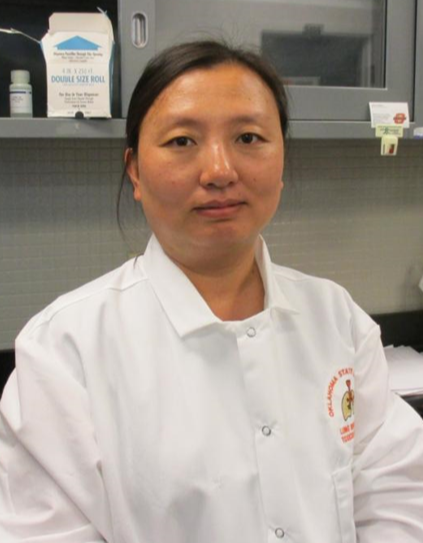
Core Manager and Research Assistant Professor
Office: Rm 259B, McElroy Hall
E-mail: yurong.liang@okstate.edu
Phone: 405-744-1686Facility Location
261 McElroy Hall
Oklahoma State University
Stillwater, OK 74078 -
Services
- RNAi gene silencing and CRISPR/Cas9 editing
- Transgene overexpression, mutagenesis, and deletion
- Lentiviral, adenoviral, and nonviral gene transfer
- Stable knockout and transgenic cell-line development
- Bulk and single-cell RNA sequencing
- MicroRNA Sequencing
- Ribosome sequencing/ribosome footprinting (Ribo-seq)
- Spatial gene-expression profiling
- n-counter digital multiplexed profiling
- Genome-wide CRISPR activation, knockout, and interference screens
- Reporter assays, real-time PCR, and droplet digital PCR
- Respiratory and infectious-disease reagents, pathogens, cell lines, primary lung cells, organoids, and clinical samples
- Consultation and training
-
Standard Operating Protocol
MBC: Standard Operating Protocol (SOP)
- Initiation of a project by PI
- Consultation meeting
- Experimental design
- Number of samples
- Timelines etc.
- Assigned to MBC personnel
- A report to PI
- A meeting for result interpretation and problem solving.
-
MBGC Fee Schedule
Service
Unit Charge
Genomics
Bulk mRNA sequencing library preparation on 16 sample scale
$180/sample
Bulk total RNA sequencing library preparation on 16 sample scale
$240/sample
Bulk miRNA sequencing library preparation on 24 sample scale
$328/sample
Flex single cell RNA sequencing library preparation on 16 sample scale
$1,925/sample
3' kit single cell RNA sequencing library preparation on 16 sample scale
$3,050/sample
Spatial transcriptome gene profiling (GeoMx) (up to 4 tissue samples)
$5,662/slide
NGS sequencing (P1, 100 cycle, 100M)
$1,440
NGS sequencing (P1, 300 cycle, 100M)
$2,000
NGS sequencing (P2, 100 cycle, 400M)
$2,092
NGS sequencing (P2, 200 cycle, 400M)
$3,053
CRISPR screen, plasmid, pooled gRNA library
$499
CRISPR screen, lentivirus, pooled gRNA library
$1,999
NanoString nCounter (per catridge, Reagents must be purchased separately)
$600
Bioinformatic and data analysis
$90/hour
Molecular Biology
Non-viral or lentiviral shRNA or gRNA vector
$99/vector
Non-viral or lentiviral overexpression vector
$149/vector
Adenoviral shRNA vector
$318/vector
Adenoviral overexpression vector
$368/vector
Gene mutation
$200/vector
Gene deletion
$315/vector
Lentivirus preparation and titer determination, >108 TU/ml
$599/4 ml
Adenovirus preparation and titer determination, >108 PFU/ml
$1,050/4 ml
Adenovirus concentration and purification and titer determination, >1010 PFU/ml
$1,350/1.5 ml
Knockout cells: monoclonal
$3,999/line
Gene overexpression stable cells: polyclonal
$1,999/line
Gene overexpression stable cells: monoclonal
$3,999/line
Tapestation
$15/sample
Real-time PCR
$275/plate
ddPCR
$796/plate
ddPCR
$308/16 wells
miRNA isolation and RT from serum/plasma (10 samples)
$1,200/10 samples
Total RNA isolation/RT
$300/10 samples
Lung organoids
$500/vial
Reagents (Cells/viruses/ bacteria/plasmids etc)
$100/vial
Equipment use without core personnel
$35/hour
Equipment use with core personnel
$70/hour
Equipment set up fee
$18
Technical training
$90/hour
Molecular Biology and Genomics Core
The listed prices are for academic users. Active CoBRE pilot projects will be charged 75% of the fee schedule and non-academic users will be charged 1.496 of the fee schedule. b) Project-specific consumables and reagents will be provided by or additionally charged to the investigators.
-
Equipment
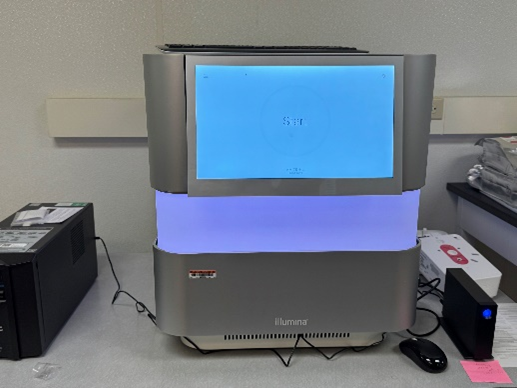
Illumina NextSeq 2000
This high-performance next-generation sequencing (NGS) platform offers unparalleled flexibility, scalability, and high-quality data across a wide range of applications. With this addition, MBGC can now perform sequencing in-house, generating high-quality data for in-depth genomic and transcriptomic analyses. The new platform significantly reduces turnaround times of bulk and single cell RNA sequencing services, enhancing our efficiency.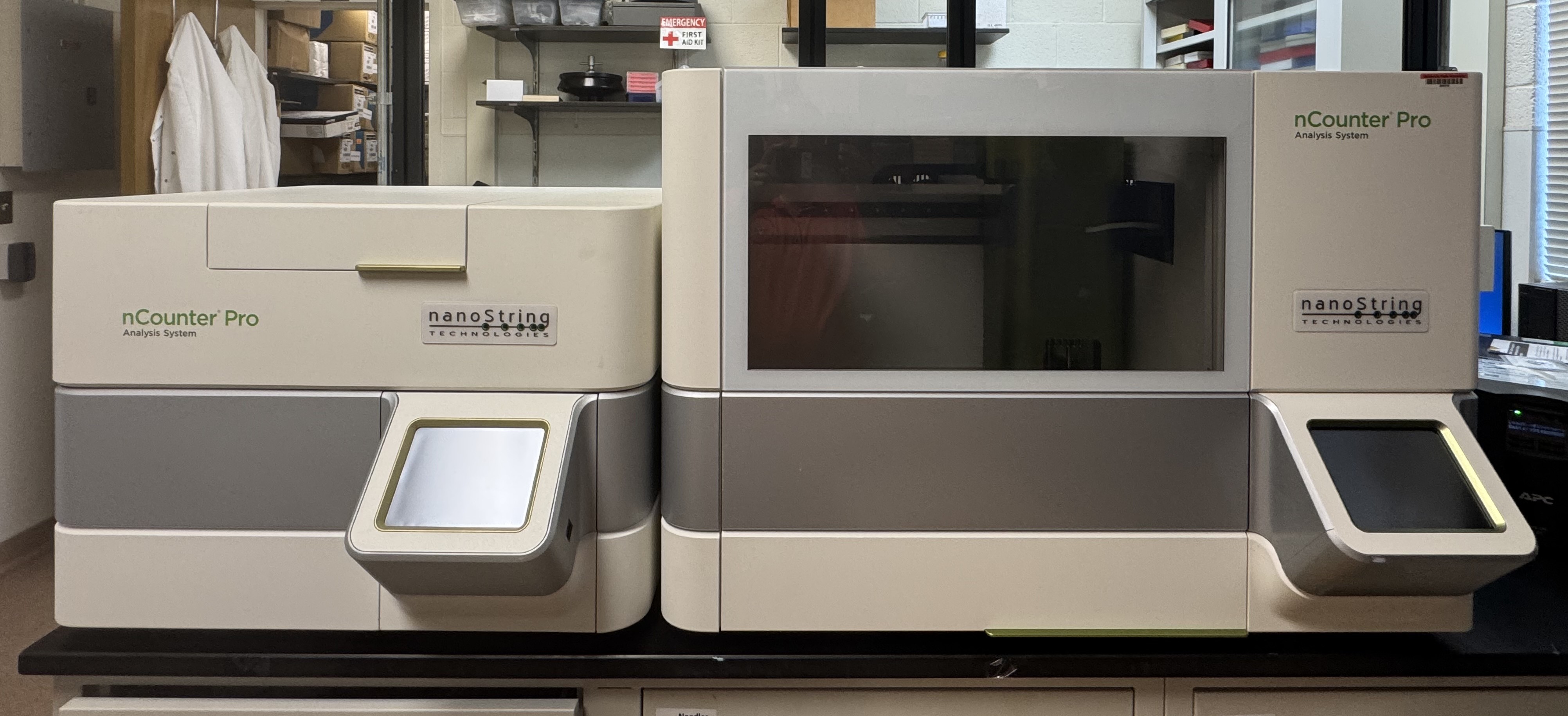
nCounter® Pro – Multiplexed Gene Expression Analysis
The nCounter® Pro Analysis System provides direct digital detection of 800+ RNA targets without amplification or enzymatic steps. It supports RNA and protein analysis from the same sample and is compatible with challenging samples, including FFPE tissues, with a simple automated workflow.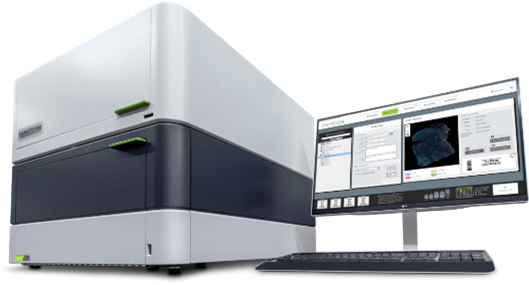
GeoMx Digital Spatial Profiler from Bruker (NanoString)
This innovative system allows researchers to see where specific genes are active within tissue samples—essentially creating a detailed map of gene expression in its original context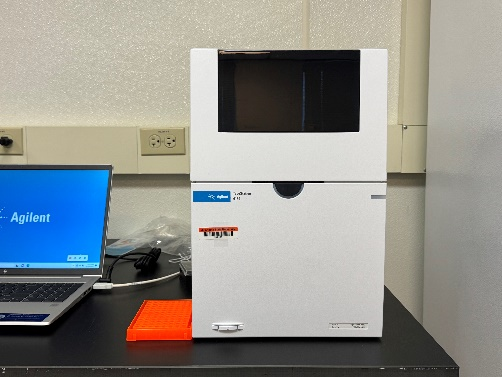
Agilent TapeStation 4150
This compact, automated electrophoresis system provides rapid, reproducible and sensitive quality control of nucleic acids. It ensures accurate assessments of DNA and RNA sample integrity and size distribution, streamlining workflows for applications such as NGS and transcriptomics.
Revvity Cellometer Ascend Fluorescent Cell Counter
The Cellometer™ Ascend™ automated cell counter is a benchtop instrument offering fast analysis and reliable cell counts with small sample volumes.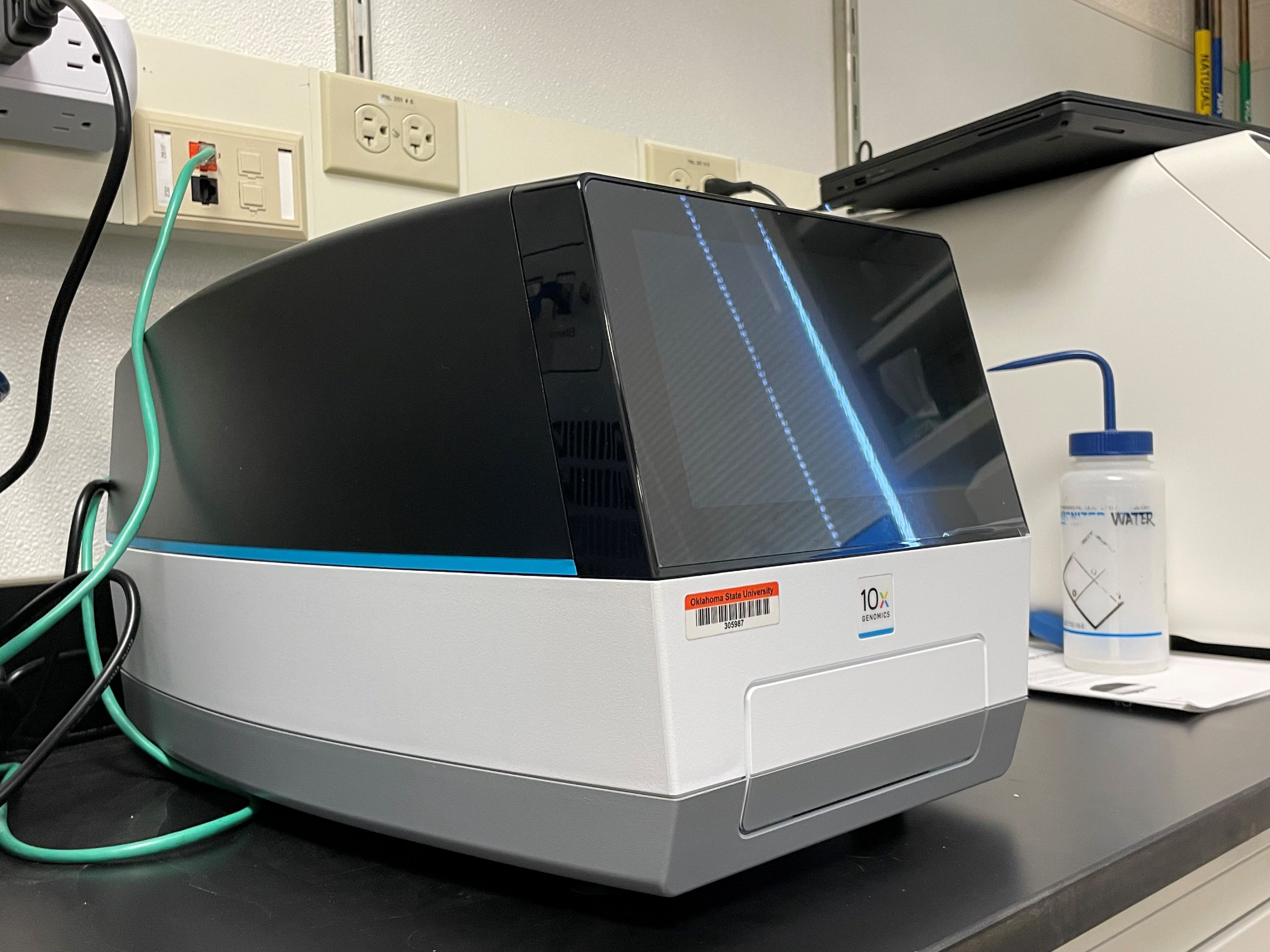
X10 Genomics Chromium X
Chromium X offers the high-throughput single cell RNA sequencing analysis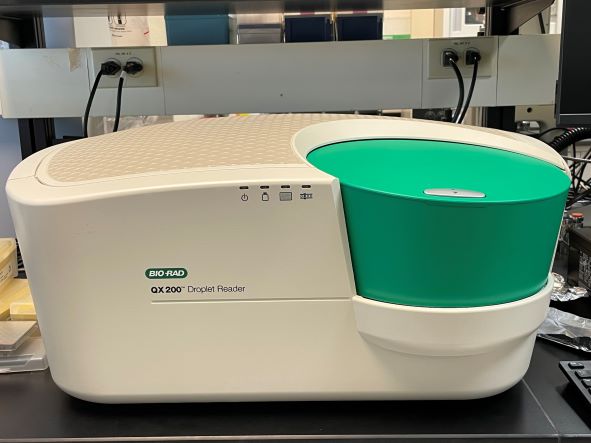
QX200 Droplet Digital PCR System
The QX200 Droplet Digital PCR (ddPCR) System provides absolute quantification of target DNA or RNA molecules for EvaGreen or probe-based digital PCR applications.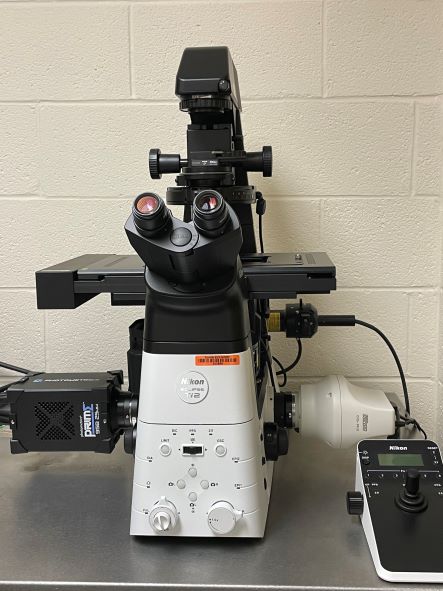
Nikon Ti2-E Motorized microscope
The ECLIPSE Ti2 inverted microscope delivers an unparalleled 25mm field of view (FOV) that revolutionizes the way you see. With this incredible FOV, the Ti2 maximizes the sensor area of large-format CMOS cameras without making compromises, and significantly improves data throughput.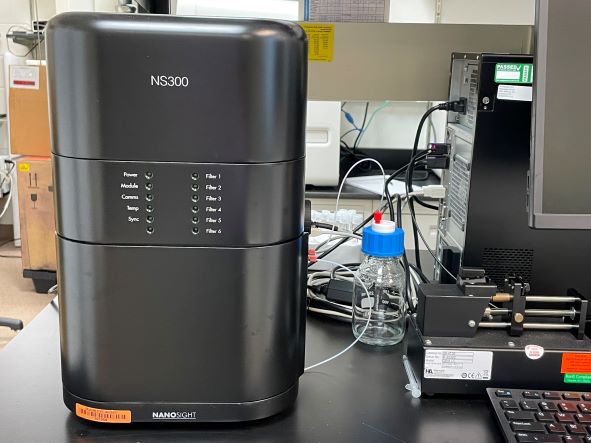
Nanosight NS300
This versatile instrument offers the major benefit of minimum user set-up, enhanced concentration measurements via advanced algorithms and fluorescence detection capability providing truly holistic analysis.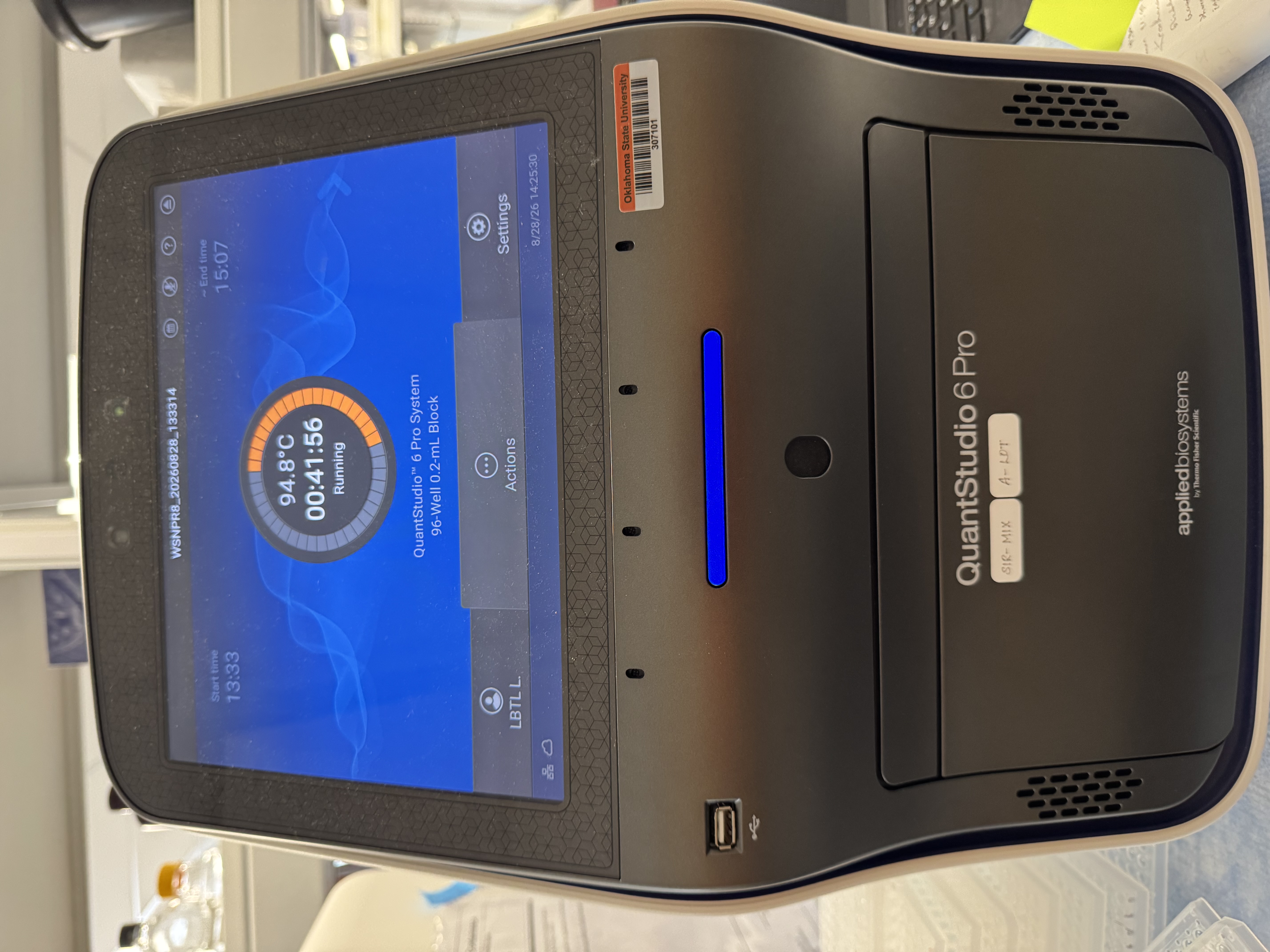
Real-Time PCR
The QuantStudio™ 6 Pro Real-Time PCR System offers five-color fluorescence detection for multiplex analysis, precise temperature control and uniform thermal cycling, and sensitive detection across a broad range of fluorescent dyes.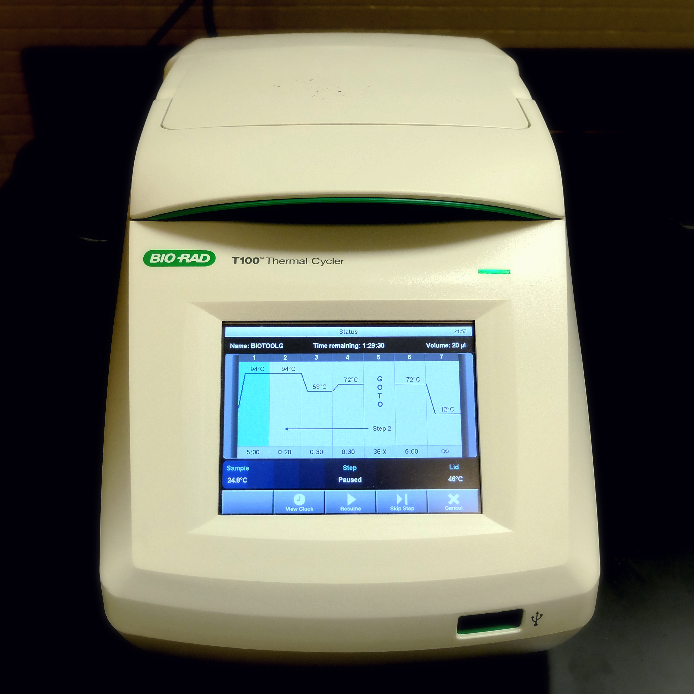
Thermal Cycler
Common features of Bio-Rad's thermal cyclers include Peltier effect technology for precise temperature control, and thermal gradient to easily optimize PCR assays in a single run.
-
Core Update - 2024
We are excited to announce that the former Molecular Biology Core (MBC) has a new name: Molecular Biology and Genomics Core (MBGC), reflecting the expansion of our genomics capabilities. MBCG is a centralized core facility dedicated to providing cutting-edge molecular biology and genomics technologies and expertise to support a wide array of research needs. Our services range from basic molecular biology techniques to advanced technologies such as CRISPR, single cell RNA sequencing (scRNAseq), and spatial whole transcriptomics. We offer a comprehensive suite of services, from sample preparation and sequencing to data analysis and interpretation, tailored to assist researchers in exploring complex biological questions.
What is New at MBGC?
We are thrilled to introduce two state-of-the-arts instruments to our facility: the Illumina NextSeq 2000 and the Agilent TapeStation 4150.Illumina NextSeq 2000: This high-performance next-generation sequencing (NGS) platform offers unparalleled
flexibility, scalability, and high-quality data across a wide range of applications. With this addition, MBGC can now perform sequencing in-house, generating high-quality data for in-depth genomic and transcriptomic analyses. The new platform significantly reduces turnaround times of bulk and single cell RNA sequencing services, enhancing our efficiency.Agilent TapeStation 4150: This compact,
automated electrophoresis system provides rapid, reproducible and sensitive quality control of nucleic acids. It ensures accurate assessments of DNA and RNA sample integrity and size distribution, streamlining workflows for applications such as NGS and transcriptomics. -
Core Update - 2023
Molecular Biology Core (MBC) continues to provide service and support to standard molecular biology techniques including gene silencing/knockout and overexpression, realtime PCR and bulk RNA sequencing.
We highlight three of the State-of-Art technologies recently developed in the MBC.
Droplet digital PCR: The MBC houses a BioRad QX200 AutoDG Droplet Digital PCR system. Compared to real-time PCR, this system provides the most precise and sensitive absolute quantification of target DNA or RNA molecules.Human lung tissue models: Current in vitro cell culture systems and animal models do not faithfully replicate the pathology of human diseases. The MBC has developed iPSC-derived human alveolar organoids for respiratory pathogen infections and is offering the unique resource to Center investigators. They recapitulate the in vivo alveolar epithelium and are more physiologically relevant than other systems for studying human biology. These organoids express alveolar epithelial type II cell markers, have high expression of human angiotensin-converting enzyme 2 (ACE2) and transmembrane serine protease 2 (TMPRSS2) and are susceptible to SARS-CoV-2 and influenza virus infections. The MBC is currently developing iPSC-derived human alveolar organoids with mesenchymal and immune components.
Single cell RNA sequencing: scRNA-seq has become a popular tool in biomedical research, including the
investigation of respiratory infectious diseases. Researchers can use single-cell data to characterize and identify heterogeneous cell populations, reveal novel cell types, characterize rare cell types, identify new cell markers and regulatory pathways and profile heathy and diseased tissue and organs. In the past year, MBC has established scRNAseq data analysis pipeline by reanalyzing publicly available scRNA-seq datasets and will generate our own scRNAseq datasets by November 2023. The MBC has Chromium iX from 10x Genomics in the Core and will be able to manage BSL2/3 samples for scRNA-seq. -
Core Update - 2022
The overall objective of the Molecular Biology Core (MBC) is to provide centralized services and cuttingedge technologies and expertise in molecular biology.
MBC provides the following services and support,
1) Functional studies using RNAi and CRISPR/Cas9, transgene overexpression, mutagenesis and deletion, lentiviral, adenoviral and non-viral vectors for gene transfer,
2) Genome-wide gene profiling using bulk RNA sequencing
3) Genome-wide CRISPR gene activation, knockout and interference screens,
4) Molecular assays including reporter assays, real-time PCR and droplet digital PCR,
5) Reagents for respiratory and infectious disease research including respiratory viruses and bacteria, and reporter viruses, cell lines, primary lung cells, and human lung organoids, and
6) Advice and consultation on various aspects of molecular biology, developing or adapting new methods as needed and disseminating core resources and technologies. Other State-of-the-art technologies under development include knockout and transgenic cell lines, single-cell RNA sequencing, and spatial gene profiling.
OCRID Core Facilities User Satisfaction Survey
OCRID core facilities are committed to providing top quality services and technical expertise in respiratory and infectious disease for center investigators as well as non-center investigators. We encourage you to fill out our quick 10 question survey so your answers, comments and suggestions can help us improve our services.